

Manufacturing the World Fairly
Article 3-3
Manufacturing the World Fairly
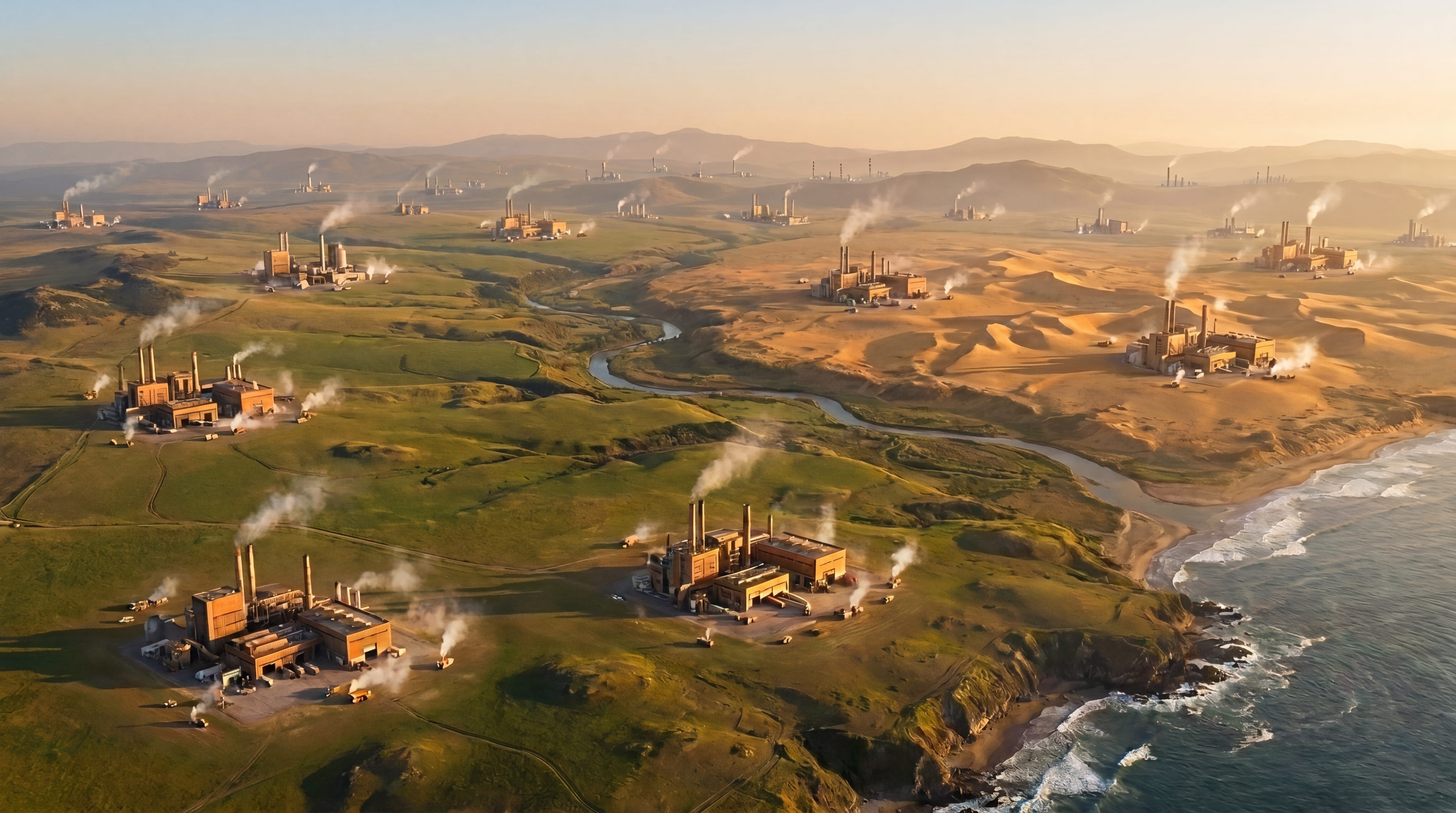
The most important fact about how the world makes things is also the most destructive: manufacturing does not go where it makes the most sense. It goes where labor is cheapest. And that single rule — chase the lowest wage on earth — quietly produces a great deal of human misery, on both ends of the chain at once.
What chasing the cheapest labor actually does
Start with the countries left out. When the world’s factories cluster wherever wages are lowest, whole nations are left with too few jobs for their people — especially their young people. The scale of this is not abstract. In high-income countries, about four in five young adult workers aged 25 to 29 hold a regular paid job; in low-income countries, only about one in five do. [Source: ILO Global Employment Trends for Youth 2024.] Across Africa — home to the youngest and fastest-growing population on earth — more than a quarter of people aged 15 to 24 were not in employment, education, or training as of 2022. [Source: ILO, 2025.]
That much idleness among the young is not merely an economic statistic; it is a fuse. Youth unemployment is one of the strongest predictors of social unrest, and its consequences are exactly the ones filling the world’s headlines: poverty, hunger, instability, and migration — people leaving home not because they want to, but because there is no work where they were born. [Source: New York Times / UN Population Fund.] A world that concentrates work in a few low-wage corners and strands everyone else is a world manufacturing its own crises: empty hands in one place become desperation, and desperation moves.
Now look at the other end — the countries that “win” the factories. Their prize turns out to be a trap. They were chosen because they were cheap, so to keep the work they must stay cheap. The moment their workers cost more — a living wage, safer conditions, the right to organize — the brands move on to the next cheapest country. This is not a theory; it is the documented behavior of the global garment industry, openly called a “race to the bottom.” [Source: Clean Clothes Campaign; Economics Observatory, 2025.] The results are brutal and well-recorded: garment workers in the major producing countries earn, on average, around 45 percent below a living wage, and fewer than two in a hundred earn enough to live decently. [Source: Industry Wage Gap Metric; Clean Clothes Campaign.] When demand shifts or brands chase a cheaper country, workers are dismissed en masse — in one 2024 case, two thousand workers at a single factory, sixty percent of its workforce, let go at once. [Source: Business & Human Rights Resource Centre, 2024.] The “winning” country is held hostage by its own victory: exploit your people, or lose the work.
So the system harms nearly everyone. The countries without factories suffer joblessness and everything that follows from it. The countries with factories are trapped into suppressing their own workers to keep them. The benefits flow to almost no one except the owners of capital, who collect the savings of each move to a cheaper place. It is, in the most literal sense, a race to the bottom — and almost everybody is losing it.
The fund asks a different question
The fund’s manufacturing does not begin with “where is labor cheapest?” It begins with a different question entirely: where does it make the most sense to make this product — given where the raw materials are, what it costs to move them, the carbon it burns, and who actually needs the work?
That single change of question changes everything downstream. Instead of optimizing for the lowest wage and letting the human costs fall on whoever is unlucky enough to absorb them, the fund optimizes for something close to the opposite: spreading meaningful work as evenly as it sensibly can across the world, so that no nation is either stranded without jobs or trapped into exploitation to keep them. The fund does not impose this map from above; it computes it continuously, with AI, from real data about resources, populations, transport, and need — a living map that updates as the world changes, not a five-year plan handed down by a committee. [Cross-ref: the full methodology, the country-by-product model, and the phased implementation live in Part 6.]
Why this redistribution does not destroy lives
Here is the part that has never been possible before. In every prior attempt to move manufacturing around the world, redistribution meant workers in one place losing their livelihoods to workers in another — a straight transfer of suffering, with clear winners and losers. That is why moving factories has always been a threat.
Under the fund, it is not a threat, because of one structural fact: the factory that moves still belongs to the fund, which means it still belongs to its members. If your country’s textile work shifts elsewhere because the cotton grows closer to another site, you do not lose your stake in that factory — you still earn dividends from it wherever it stands, you have first claim on work in the fund’s other operations near you, and you keep access to the services of the digital bank and to the innovation royalties open to every member. No one is made whole by the dividend alone; but no one falls through the floor either. The move stops being a catastrophe and becomes a managed transition that the displaced worker can actually afford to live through.
This is what a basic, shared income does to the politics of change. When losing a factory no longer means losing everything, economic evolution stops being something people must fight to survive and becomes something they can afford to support. Even the fear of automation softens: if machines or new methods make production cheaper, and the members decide to use them in their fund companies, that shows up as higher dividends to the people who own the machines — which is everyone — rather than as ruin for the people the machines replaced. Progress stops being the enemy of the worker when the worker owns the progress.
A trend, not a takeover
It would be dishonest to claim the fund can re-map all the world’s manufacturing. It cannot, and it will not try. The fund controls only its own companies, and it will only ever hold a deliberately limited share of any industry. What it can do is move its own production according to this fairer logic — and in doing so, prove that the fairer logic works.
That demonstration is the real lever. When fund-owned factories show that you can make excellent goods while paying fair wages, spreading work to the places that need it, and still competing on price, they set a standard the rest of the industry has to reckon with. Workers elsewhere can point to them and ask why their employer cannot do the same. Other companies, competing for the same workers and the same customers, are pressured toward the same behavior. The fund does not have to manufacture the whole world fairly to change how the world manufactures. It has to do it visibly, at meaningful scale, in enough places — and let the example do the rest. A trend started in a few honest factories can reach much further than the factories themselves.
Who should own the raw materials
One last piece completes the picture, because fair manufacturing means little if the raw materials beneath it are still stolen. In much of the world, the wealth under the ground is owned by governments — and that ownership has been, again and again, the exact channel through which a nation’s resource wealth vanishes into corruption while its people stay poor.
The fund proposes a different arrangement. The citizens of a resource-rich country should own and manage their own resources directly — through companies they form and hold themselves — and sell those materials to fund manufacturers at fair market rates. The government’s role shrinks to honest oversight and tax collection, and nothing more. The citizens earn from their own land. The fund pays fairly for what it buys. And no official with a title in between gets to quietly pocket the difference.
To be clear about scope: replacing how governments handle their raw materials today is not something the fund sets out to pursue — it is not the fund’s mission to remake any nation’s resource laws. But for the citizens of a country who wish to consider such an arrangement, it is something the fund could help them structure. The fund offers the idea and the tools; whether to take them up is for the people of each country to decide. [Cross-ref: governance and anti-corruption design in Part 4.]
Put it all together and the picture inverts the world we have. Today, the question of who makes what, for whom, and at whose expense is answered by whoever can find the cheapest hands to use. Under the fund, for the first time, that question can be answered openly, with data, for the benefit of the people doing the work and the people buying the goods alike — and the raw wealth of the earth can finally pay the people who live above it.
Join the conversation
This series belongs to everyone, including its critics. Tell us where you were convinced and where you were not — and if you see a way to make the proposal stronger, say so. You'll need a free account with a handle of your choosing.
Reset your password
Enter the email you signed up with. If it's registered, we'll send you a link to set a new password.
Be the first to comment.