

The Fund's Financials Through the Years
Article 5-5
The Fund’s Financials Through the Years
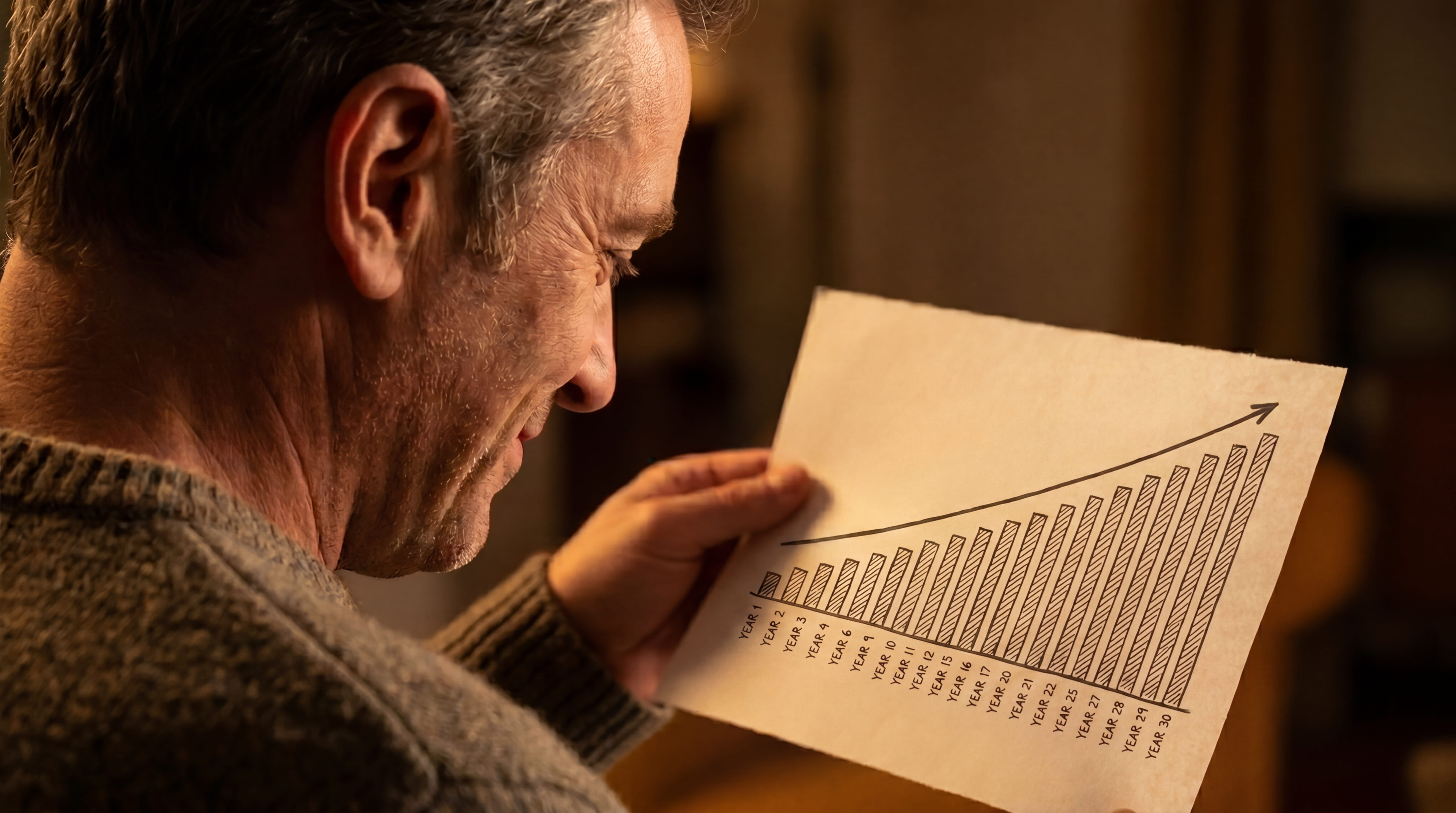
Every other part of this series describes what the fund is meant to do. This article does something less comfortable and more important: it shows the money. How much comes in, where it goes, what it can buy, and what a member actually receives — year by year, for the first ten years.
The numbers here are not promises. They are the output of a model built on real-world figures — what banking licenses cost, what consumer-goods companies sell for, what a digital bank earns per customer — and you can change every assumption in it yourself. What follows is the careful, middle-of-the-road case. We will also show you the floor and the ceiling, because a number you cannot stress-test is a number you should not trust. Treat every figure as approximate: these are reasoned estimates, not forecasts, and real costs and profits could run higher or lower.
One honesty up front, so nothing below surprises you: for the first decade, the money a member gets back is less than the money a member puts in — but the positive impact in the way we do business could arrive faster than expected. That is not a flaw in the plan. It is the plan. The early years build the machine. We will return to this, with the exact figures, rather than hide it.
Where the money comes from
The fund has two engines of income, and they switch on at different times.
The first is membership. Every member contributes one dollar a month. After the ordinary losses any real system suffers — fees, currency conversion, people who join and drift away — call it roughly ten dollars a year that actually reaches the fund per member. That sounds trivial. It is not, because it is the most predictable recurring income on earth: it does not depend on profit, on markets, or on anyone buying anything. It only depends on how many people stand together in wanting to change the world.
A word on how the years are counted, because the membership figures use one clock and the operational milestones elsewhere use another. Membership is counted from the day enrollment opens — “membership year one” is the first year after people can join — and that count is one continuous line that never resets. Enrollment opens at the start of the founding phase, so membership grows for years before the fund launches as an operating institution; it crosses the ratification floor of about fifty million people around the fifth year, which is roughly when ratification and launch occur. (Ratification waits for the membership conditions to be met: even if the founding committee finishes its deliverables earlier, the fund does not launch until enough members have joined.) Every member is a real, contributing member from the day they join — the fund does not pad the count with free sign-ups — so these numbers are deliberately conservative. [Cross-ref: Article 5-4 — How the Fund Gets Built.]
In the middle-of-the-road case, about eight million members have joined within the first year of enrollment, and membership grows from there. That single assumption drives everything else, so it is worth seeing it plainly:
| Membership year | Members | Membership income |
|---|---|---|
| Year 1 | ~8.0M | ~$82M |
| Year 2 | ~12.8M | ~$130M |
| Year 3 | ~20.4M | ~$208M |
| Year 4 | ~32.5M | ~$332M |
| Year 5 | ~51.7M | ~$527M * |
| Year 10 | ~468M | ~$4.77B |
* ≈ ratification floor reached; The Launch near here.
A note on reading these years against the fund’s operations. The membership figures above are counted from the day enrollment opens. The fund’s probable launch — when the ratification conditions are met and the institution begins operating — falls around membership year five. That moment is “The Launch,” and the fund’s operating years are counted from it: operating year one is the launch year itself, so membership year six is the equivalent of operating year one, membership year seven of operating year two, and so on. Wherever this series gives an operational milestone — a bank opening, a first acquisition, a dividend — in “operating years,” add roughly five to place it on the membership clock above. [Cross-ref: Article 5-4 — How the Fund Gets Built.]
The second engine takes years to start but eventually becomes the larger of the two: the fund’s own businesses — the companies it comes to own. And the first fuel that powers that engine, earlier than any factory, is the fund’s digital bank: its profits are what let the fund acquire and build the companies that follow.
The digital bank is the fuel of the second engine — and most digital banks fail
Here we have to be honest about hard ground, because a reader who knows the industry will know it already, and a reader who does not deserves to.
Most digital banks do not work. According to a study by the global consultancy Simon-Kucher, fewer than five percent of the world’s roughly four hundred neobanks have reached breakeven; in their analysis of the twenty-five largest, only two were profitable, and most earned under thirty dollars a year per customer. [Source: Simon-Kucher & Partners, “The Future of Neobanking,” 2022; updated commentary 2023.] The picture has improved a little since — by 2023 the same firm noted a growing minority approaching profitability — but unprofitable digital banks are still the majority. Several have collapsed outright, some leaving customers temporarily unable to reach their own money. If the fund’s plan quietly assumed it would be the rare exception, you should not believe the plan.
So why include a bank at all? Because the reasons digital banks fail are specific, they are known, and — this is the part that matters — they are reasons the fund’s digital bank does not share.
Digital banks fail, overwhelmingly, for four reasons:
First, most can never stop being a customer’s second account: people keep their real money at their old bank and use the new app for pocket change, so the bank earns too little per user to survive.
Second, many are not really banks at all — they rent access to someone else’s banking license, and when that arrangement breaks, customers get hurt. In the largest recent failure of this kind, a middleman’s collapse left a shortfall of tens of millions of dollars between what customers had deposited and what was actually being held. [Source: reporting on the 2024 Synapse collapse; U.S. Senate letter citing a $65–96M shortfall.]
Third, most run on investors’ money rather than their own earnings, and when the funding climate cools — as it sharply did, with fintech funding falling by more than half year-on-year in late 2024 — they run out of road. [Source: industry funding data, 2024–2025.]
Fourth, new banks struggle to earn trust against institutions that have had a century to build it.
Now place the fund’s digital bank against that list. It is not a second account; it is the member’s own bank, the bank of the institution they co-own — the one place where being a member and being a customer are the same thing. It does not rent a license; it holds a real one in each country it operates in. It does not run on venture capital that can walk away; it runs on members’ dollars. And it does not have to manufacture trust from nothing; it carries the trust of an institution the member already belongs to, backed by the transparency and oversight described elsewhere in this series.
That does not guarantee success. Nothing guarantees success. But it means the fund’s digital bank is built precisely where the others broke.
What we assume the bank earns — deliberately low
The most successful digital bank in the world today earns roughly a hundred and sixty dollars a year from each active customer, at a net margin around sixteen percent, serving exactly the kind of customers the fund means to reach — people the old banks ignored. [Source: Nu Holdings (Nubank) quarterly results, 2025 — average revenue per active customer ~$13/month, net income ~$1.9B on ~$11.5B revenue in 2024.]
We do not assume the fund will match the best bank on earth. The model assumes the fund’s bank earns approximately forty dollars a year per member who uses it — about a quarter of what the leader earns — at a fifteen-percent margin, and only counts members in countries where a bank is actually operating. We chose a low number on purpose. If the fund does better, the figures below are conservative. If it does worse, there is room to spare. You can set this number yourself in the model and watch what happens; it is the single assumption the later results move on most.
One timing point matters and is built into every figure here: a banking license takes around two years to obtain. [Source: industry licensing timelines; e-money and digital-bank authorizations typically 1–2 years.] Money committed to opening a bank in operating year one does not produce an operating bank until operating year three. So the bank earns nothing in the first two operating years, a little in the third, and only becomes a serious engine in the second half of the operating decade. Members in the earliest years do not have a fund bank yet. We say so plainly because the numbers say so plainly.
What the money builds
Put the two engines together and the decade has a clear shape. The first years are lean: membership income is real but modest, the bank does not yet exist, and almost everything goes into building — opening banks as fast as licenses and capital allow, and setting aside money toward the first company purchases.
The fund buys companies whole. It does not take small stakes in the corporations it criticizes; it acquires a company outright, makes it private, and rebuilds it to compete at the top of its industry — which costs not only the purchase price but a further investment, spread over years, to bring a middle-tier company up to first-rank quality. [Source: model assumes ~$880M average enterprise value per acquisition, based on a comparable 2025 mid-size consumer-goods transaction, plus a 50% upgrade investment spread over five years.] Whole companies bought this way are expensive, so they come slowly. In the middle case, the fund completes its first acquisition around operating year six and owns roughly seventeen companies by operating year ten. Seventeen, in ten operating years. That is not a disappointment; it is the honest cost of buying real things outright instead of renting influence.
Banks come faster than companies, because they are cheaper to start — but not as fast as money alone would allow. Opening a real, licensed bank in a country is not something capital can rush: each one needs its own regulatory approval, local compliance staff, and local directors, built one relationship at a time. The fund can realistically launch only a handful of new countries in its early years — around four — ramping to roughly ten a year as it gains experience. So the first banks open in operating year three, and the network grows steadily rather than explosively: about fourteen countries by operating year five, and roughly fifty by operating year ten. Reaching every country — the ceiling of one bank per nation — takes well beyond the first operating decade. That is slower than the fund’s bank investment account could afford, and exactly as fast as the real world allows.
| Metric | By operating year | |||
|---|---|---|---|---|
| Operating banks | Yr3: ~4 | Yr5: ~14 | Yr7: ~28 | Yr10: ~53 |
| Companies owned | Yr5: ~1 | Yr8: ~5 | Yr10: ~12 | |
| Bank net profit | Yr5: ~$19M | Yr7: ~$93M | Yr10: ~$650M | |
| Company profit | Yr6: ~$88M | Yr8: ~$530M | Yr10: ~$1.06B | |
Notice how the balance shifts over time within that second engine. In the early and middle years the bank is the larger earner — it scales with members while company acquisitions are still rare — but by operating year ten, as the first dozen companies mature, company profit (approximately $1.06 billion) pulls ahead of bank profit (approximately $650 million). This is exactly what “the bank is the fuel” means: its profits carry the fund through the lean early years and pay for the first acquisitions, and then the companies it helped buy become the larger engine in their own right. Neither is a side project.
What a member actually receives
Now the figure every member will want, and the one we refuse to dress up.
In the middle case, the dividend per member per year runs essentially nothing for the first few years — there is no profit to share while the fund is building — and then climbs as the bank and the companies mature:
| Operating year | Dividend per member |
|---|---|
| Years 1–2 | ~$0.00 * |
| Year 3 | ~$0.02 |
| Year 4 | ~$0.09 |
| Year 5 | ~$1.24 |
| Year 6 | ~$0.97 ** |
| Year 8 | ~$1.86 |
| Year 10 | ~$2.19 |
* Building; nothing to share yet.
** Dips: the first acquisition adds members to share with faster than profit.
A member contributes about twelve dollars a year. By operating year ten, in the middle case, they receive back roughly two. Across the whole first decade, a member puts in more than the fund returns to them. There is no honest way to phrase that as a financial win, and we will not try; but the impact in the financial-services industry, and in the industries where companies have already been acquired, will start transforming them positively for consumers — lower prices, fairer terms, better products — long before the dividend alone would justify joining.
What changes the meaning of that sentence is what those two dollars are. It is not the interest on a deposit. It is a share of the profit of a global bank serving a hundred million people and a dozen companies the member co-owns — built from a dollar a month, owned equally, governed one-person-one-vote. The dividend is small because it is being reinvested to build something that did not exist before, not because the engine is weak. The engine, by Year 10, is producing billions a year and accelerating.
A member who joins for the two dollars has misunderstood the offer. A member who joins to own a piece of a fairer economy in a more peaceful world, and to leave their children an institution that promotes a global community and keeps paying forward long after Year 10, has understood it exactly.
The floor and the ceiling
Everything above is the middle case. The honest range is wide, and it turns almost entirely on one thing: how many people join. The fund’s costs are roughly fixed; its income scales with membership; so scale is not a detail, it is the whole story.
| Scenario | Members | Dividend /member/yr | Companies | Banks |
|---|---|---|---|---|
| Pessimistic slow growth | ~61M | ~$1.69 | ~1 | ~52 |
| Conservative middle | ~468M | ~$2.19 | ~12 | ~53 |
| Optimistic fast growth | ~1.66B | ~$2.42 | ~50 | ~53 |
Look closely at that table, because it contains the most important lesson in the fund’s whole economics. The dividend per member barely changes across the three cases — from under two dollars to about two and a half. But the number of companies the fund owns swings from one to fifty. Why? Because more members means more money to build with, but also more members to share with. Scale does not make each member richer. It makes the fund more powerful in the world’s economy. (Notice, too, that the number of banks barely moves across scenarios — about fifty in every case — because banks are limited by how fast they can be built, not by how much money there is to build them.)
That is the quiet truth the model keeps insisting on, no matter which assumption you change: the fund was never an instrument for making a member wealthy. The dollar a month was always buying something else — a share of ownership, a vote, a counterweight, a different balance of power. The dividend is the receipt, not the reason.
The seed: what it costs to begin
One figure remains, and it comes before all the others: the cost of the years before any member exists. Someone must design the institution, draft its charter, build the first version of its systems, and bring it into being — and that work has to be paid for from seed capital, raised before there is any membership income at all.
In the model, the roughly five-year founding period costs on the order of $340 million in total: the compensation of the founding committee and the operational team it recruits, the global gatherings where the committee does its work, the legal entities and regulatory groundwork across the pilot countries, facilities and administration, and the first build of the fund’s AI deliberation and governance system — the last of these being a real engineering effort rather than a side project. It is a large number, and the series states it plainly rather than flattering the reader with a smaller one: an institution meant to be owned by all of humanity is expensive to build correctly. The article on how the fund gets built describes where that seed comes from without letting the people who provide it own what they build. [Cross-ref: Article 5-4 — How the Fund Gets Built.]
Roughly three hundred and forty million dollars to begin; billions a year in motion by the end of the first operating decade; and a member, throughout, paying a dollar a month to own an equal share of all of it. Those are the numbers. The rest of this series is what they are for.
Join the conversation
This series belongs to everyone, including its critics. Tell us where you were convinced and where you were not — and if you see a way to make the proposal stronger, say so. You'll need a free account with a handle of your choosing.
Reset your password
Enter the email you signed up with. If it's registered, we'll send you a link to set a new password.
Be the first to comment.