

How the Fund Gets Built
Article 5-4
How the Fund Gets Built
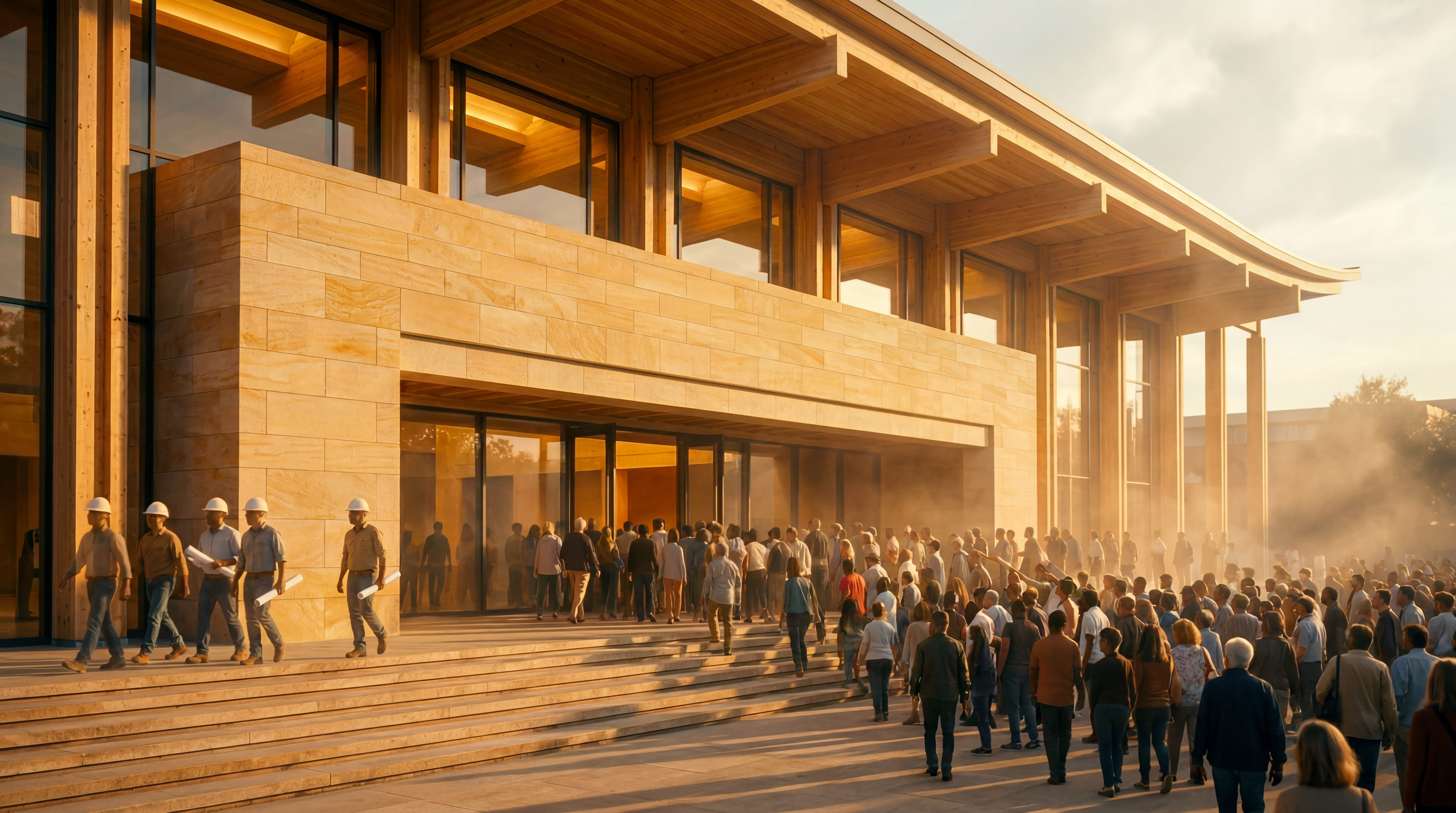
This is the article where the rest of the proposal either becomes credible or does not.
A reader who has worked through the previous articles understands what the fund is, what it owns, how it competes, how its money flows, and what it could deliver to billions of people over decades. None of that matters if the fund cannot actually be built — if the people who design it become the people who control it, if the seed capital arrives with strings that compromise the institution, if the founding process fails to produce something real members would trust. The challenge of building the fund without the builders becoming oligarchs is the single hardest design problem in the entire proposal, and it is exactly where most ambitious institutional ideas die: the proposal sounds good in principle, the construction phase requires concentrated authority, the concentrated authority becomes permanent, and the institution meant to distribute power ends up reproducing the pattern it was built to solve.
The fund’s answer draws on a handful of real precedents — Iceland’s 2011 constitutional convention, the European Union’s founding between 1950 and 1957, Mondragón’s emergence in 1956, Bitcoin’s creation and its founder’s disappearance, Wikipedia’s handover from founder to community — none of which is a complete template, but each of which proves that founders absenting themselves is achievable, and teaches what works and what fails. This article describes the architecture in detail: who builds the fund, on what authority, with what mandate, under what constraints, and how they leave when the work is done. It addresses the seed-capital question honestly. And it names the ways the project could fail, because credibility requires it.
The two-phase founding architecture
The fund’s construction happens in two phases with different governance structures, separated by a constitutional ratification by prospective members. After both phases, the fund runs under the regular governance described in Part 4. The dates below are illustrative — if the planning phase were to launch in 2027, it would run roughly as follows — but the sequence matters more than the calendar.
Phase A: the founding committee (roughly the full five-year planning phase; say 2027–2031). A founding committee of 200 people is convened with a defined mandate to produce three deliverables: the constitutional documents that establish the fund’s foundational architecture (the bicameral governance, the constitutional limits, the operational principles, the dispute-resolution mechanisms); the institutional infrastructure to launch operations (the legal entities in each jurisdiction, the AI technology systems, the digital banking platforms, the initial regulatory approvals); and the recruitment of the operational team that will run the fund after the committee dissolves.
The founding committee is not an operational body. It does not run the fund; it designs the fund and assembles the people who will run it. That distinction is critical, because conflating design with operation is exactly how founders become permanent occupants.
The committee’s work runs over roughly five years, in two distinct halves. For the first thirty months, it produces the complete first draft of the deliverables — the constitutional documents, the institutional design, the operational architecture. If the drafting genuinely cannot be completed within those thirty months, the committee may request an extension from the prospective members before it moves on — an extension that applies to the drafting phase and must be explicitly granted, never assumed. Then, for the following thirty months, the committee opens the draft to the members: it submits the documents section by section for comment and adjustment, and each section is revised through that participatory cycle until it reaches acceptance, with whatever membership has joined by then taking part. The result is a document the members have helped shape rather than one handed down to them. Only when the full review cycle is complete is the whole revised document submitted to the floor for ratification — and only if the geographic-floor conditions are met at that point. [Cross-ref: Article 5-5 — The Fund’s Financials Through the Years.]
When the committee completes its work and the document is ratified — or if its mandate expires without producing a ratifiable document — it dissolves, and every member of it is then constitutionally barred for twenty years from holding any operational role in the fund or its companies, from sitting on any subsequent transition body, and from receiving any compensation from the fund beyond their ordinary member dividend. Former committee members return to being ordinary members with one vote each and no special status. The fund does not have founders in any continuing sense; it has former designers who returned to ordinary membership.
Phase B: the transition committee (begins at the thirty-month mark, in parallel with the review phase; say 2029–2032). Once the founding committee’s first draft exists — at around the thirty-month mark — a smaller transition committee of thirty to fifty people begins its work in parallel with the section-by-section review, so that the operational scaffolding is ready the moment members ratify. It includes some former members of the founding committee (in advisory, not decisional, roles), some newly elected representatives from the prospective membership, and the operational team being recruited. Its mandate is to prepare to switch the fund on — to stand up the operational and governance systems, ready the first elected representatives, and carry the fund across the line from a ratified design into a running institution the moment ratification occurs — and to course-correct if the design does not work in practice. It is important to be clear about what does not happen yet: the fund does not own banks during the planning phase. Throughout these years, members’ contributions have been accumulating in ordinary, audited holding accounts at existing banks, because the fund cannot operate its own bank until it is licensed, and licensing belongs to the operating phase that begins at The Launch. The transition committee’s job is to make the institution real and hand it to its members and operating team, not to acquire banks or companies. It then dissolves, under the same twenty-year prohibition. [Cross-ref: Article 5-7 — The Digital Bank: Why and When; Article 5-5 — The Fund’s Financials Through the Years; Article 5-9 — The First Decade.]
Phase C: regular governance (from The Launch onward — the Launch, in 2032, is operating year one; say 2032+). The fund operates under the bicameral structure described in Part 4 — a Citizen Chamber elected by global one-person-one-vote, a Country Chamber where each country casts a single vote set by its citizens’ internal majority, AI-mediated deliberation between the chambers, and a constitutional layer protecting the foundational rules. The operational team reports to the chambers. Elections run on regular schedules. The fund’s ordinary life begins. [Cross-ref: Article 4-1 — One Person, One Vote.]
The sequence, precisely
The phases above raise a fair question: if members vote to ratify the fund using its AI deliberation system, and the fund’s banks and infrastructure cost money to build, what gets paid for by whom, and in what order? The answer is a deliberate sequence designed so that nothing depends on something that does not yet exist, and so that members’ own money is never spent before members have approved how it will be used.
It runs like this. First, the founding capital — donations and founding loans, the only two sources that carry no membership claim (detailed below) — pays to convene the committee and to build the AI deliberation system and the enrollment platform. This is why that capital comes first: it funds the tools of the founding itself, including the AI system members will use to deliberate and vote. Second, with enrollment open, prospective members begin contributing their dollar a month early in the planning phase — but that money is held in ordinary, audited holding accounts at existing banks and is not yet deployed, because the fund has no bank of its own and no ratified constitution authorizing its use. The contributions simply accumulate. Third, members use the now-running AI system to deliberate and ratify the constitution and the institutional design — and if they decline to ratify, the design is corrected and brought back, which is one reason the planning phase is given a full five years rather than a rushed three. Fourth, only after ratification does the fund cross into its operating phase and begin the work that ratification has authorized — including applying for its first banking licenses.
That last point resolves a question of timing that matters. The fund does not apply for bank licenses during the planning phase; it applies in its first operating year, once it is a ratified, running institution, and the first banks open around two years later, on the schedule the banking article describes. [Cross-ref: Article 5-7 — The Digital Bank: Why and When; Article 5-9 — The First Decade.] And money is not what paces this: a per-country license costs on the order of a million dollars in capital and setup, and the first wave is only about four countries — roughly four million dollars against membership contributions already running in the tens of millions per year by then. [Cross-ref: Article 5-5 — The Fund’s Financials Through the Years; Article 5-7 — The Digital Bank: Why and When.] The accumulated contributions easily satisfy the capital a license requires; what takes time is the regulatory approval itself, not the funding.
Where the first banks should open is decided the right way: the founding committee recommends an initial set of pilot countries, against published criteria, but the members approve that choice as part of ratification. The committee proposes; the members ratify. From there, every later decision about where the fund expands is made by the members through the chambers, once the fund is operating. [Cross-ref: Article 5-7 — The Digital Bank: Why and When; Article 4-1 — One Person, One Vote.]
Who is on the founding committee, and how they get there
The committee’s composition is designed to make any single faction’s capture impossible: 200 people drawn from too many backgrounds to coordinate around any one interest, chosen through overlapping selection paths so that no single body controls who serves.
About 100 members are chosen by stratified random selection from the global prospective membership — the Iceland 2011 model adapted to global scale. Prospective members willing to serve enter a pool; from it, 100 are selected by a published, auditable algorithm, stratified for proportional representation across regions, age, gender, and profession, with the random seed generated through a public process no single party controls. This guarantees the committee includes ordinary citizens, not just experts and notables — Iceland showed that randomly selected citizens, given time and support, can engage seriously with constitutional questions, and the fund is meant to belong to citizens.
About 70 members are nominated by the professional fields the fund needs to operate: law, finance, technology, governance, economics, public health, and journalism, each field nominating through its own professional bodies with independent verification. The fund’s founding documents must engage with banking law, securities regulation, antitrust, labor law, and dozens of other technical domains that citizens alone cannot navigate — Iceland’s draft was substantive but suffered from limited technical input, and this corrects for it.
About 30 members come from civil society organizations with demonstrated commitment to the fund’s principles — cooperative federations, labor organizations, transparency advocates, environmental and human-rights and indigenous-rights groups — nominated through coalition processes, with weight given to organizations representing the communities the current arrangement most fails. They bring direct knowledge of what the system fails to deliver and what an alternative must provide.
Across all three paths the geography is constitutional: no continent or region may hold more than a quarter of the seats, and within a region no single country may hold more than fifteen percent of that region’s seats, so no national bloc can dominate even by coordinated effort. Members serve for the committee’s full term with compensation comparable to senior professional salaries in their own countries, may hold no other paid role while serving, may accept no gift or hospitality from any interested party, and file continuous, public financial disclosures throughout.
The committee’s mandate, and its limits
The mandate is explicit and exhaustive: the committee produces specific deliverables and holds no authority beyond producing them.
What it must do: draft the constitutional documents and design the bicameral governance, the constitutional limits, and the dispute-resolution mechanisms; establish the legal entities and negotiate the regulatory approvals in each jurisdiction; build the digital banking infrastructure [Cross-ref: Article 5-7 — The Digital Bank: Why and When.] and the platforms for enrollment, contributions, dividends, and governance participation; recruit the operational team; and conduct the initial enrollment so that ratification can occur.
What it cannot do: make any policy decision the constitution reserves for the chambers (which industries to enter, what to acquire, how much to invest, dividend rates beyond the constitutional baseline); modify its own mandate, composition, or compensation; extend its own term without member ratification; appoint any of its members — or their family, business partners, or political associates — to operational roles in the fund’s first twenty years; accept any compensation or hospitality from interested parties; make confidential agreements about fund operations; or commit the fund to specific acquisitions before the transition committee takes over.
The constraints are enforceable: violations bring immediate removal, forfeiture of compensation, and a lifetime ban from any fund role, enforced by an independent oversight body of twelve people drawn from professional-ethics bodies and supreme courts globally, bound by the same conflict rules. And that oversight body is itself held accountable four ways: every enforcement decision comes with a written, public, auditable opinion; major decisions are subject to ratification by prospective members (and later the chambers), who can overturn a decision after reading its reasoning; members serve staggered three-year terms, no more than two consecutive; and anyone removed may appeal through the ordinary courts of their own country — a check by institutions the fund does not control. Capturing the oversight body alone therefore gains a captor nothing, because its decisions face member ratification and external court review.
Financing the planning phase
The planning phase has to be paid for before there is any money the members have authorized — and that distinction governs everything about how it is funded. Member money, whether from monthly contributions or from members who pre-pay, belongs to the members and cannot be spent until the members have ratified the fund and approved how their money is used. The planning phase happens before that ratification. So it cannot be financed with member money at all. It can be financed only by capital that carries no membership claim: donations and founding loans. These are the two — and the only two — sources that pay for the founding work.
How much is needed is a real and sobering number. A serious build includes the compensation of a 200-person founding committee over three years and a transition team after it; the first build of the fund’s AI deliberation and governance system, which is not a side project but a real multilingual engineering effort; global enrollment, contribution, and banking-preparation platforms at fintech grade; the establishment of legal entities and regulatory groundwork across a dozen pilot countries; periodic global gatherings of the committee; an independent oversight body across the full period; the pre-launch recruitment of the operational team; and facilities, security, audit, and administration over five years. Totalled honestly and carried with a sensible contingency, the founding phase is estimated at roughly 340 million dollars over five years. It is a large number, and the series states it plainly rather than flattering the reader with a smaller one: an institution meant to be owned by all of humanity is expensive to build correctly, and the cost of building it badly — or building it captured — would be far higher. The figure is an estimate the founding committee would refine against real scope; the principle is that it is covered entirely by the two non-member sources below.
Donations. A donor may give to the founding effort directly, or to the sponsorship fund that will later cover the one-dollar contributions of members who cannot afford them. [Cross-ref: Article 5-1 — How the Money Flows; Article 2-1 — The 99% of Humanity Global Fund.] Donations carry no claim on the fund’s structure, no governance influence, and no privileged information — the cleanest possible capital. Every donor’s identity and amount is publicly disclosed; anonymous donations are not accepted, because the transparency is structural. A gift to the founding effort buys the giver exactly what it buys everyone else: an institution, owned by no one in particular, that they happen to have helped bring into being.
Founding loans. A person or organization may lend the fund operating capital on defined terms — the most operationally complex source, the most vulnerable to capture, and therefore the most heavily constrained. The terms are standardized and non-negotiable: a defined principal; a fixed repayment schedule (typically ten to fifteen years after launch, as an operating expense); repayment that accounts for inflation but provides no return beyond preserved purchasing power (founding lenders are creditors, not investors, and accept total loss if the fund never launches); no voting, governance, consultative, or priority rights and no special information access; a constitutional bar on any lender — or their family, partners, or associates — serving on either committee or in any operational role for twenty years; full public disclosure of every lender and amount; a cap of one percent of the founding target from any single source, so that the seed must come from at least a hundred different sources and no one lender can claim influence; and a binding provision that the repayment terms can never be renegotiated, accelerated, or improved after the fact.
Founding loans are structured by a financial subcommittee whose interactions with prospective lenders are documented, published quarterly, and auditable. Throughout the long repayment phase, a lender has exactly one legitimate interface with the fund — that subcommittee, on matters strictly about their loan — and no other point of contact: not operational leadership, not chamber representatives, not members. If the fund fails to launch, founding loans are simply lost; that is intentional, because it ensures the lenders are people who genuinely want the fund to exist and will bear the loss if it does not, rather than people seeking arbitrage or leverage. Taken together — the cap, the bar on governance roles, the public disclosure, the narrow documented interface, the fixed and irrevocable terms — these protections make founding-loan capture genuinely unattractive to anyone whose motive is anything other than wanting the fund to launch.
Financing the first banks and early operations
Once the fund is ratified and operating, a second and much larger pool of capital becomes available — and now it can be member money, because the members have ratified the fund and approved the plan for its use. This is the money that funds the first banking licenses, the early operating costs, and the build toward the first acquisitions, and it comes from three sources that the founding phase could not touch.
The first is the accumulated monthly contributions. Members have been paying a dollar a month since early in the planning phase, held in ordinary accounts; on ratification, that accumulated pool — and the ongoing monthly flow — becomes available for the uses the members approved. By the early operating years this is running in the tens of millions of dollars a year and climbing fast. [Cross-ref: Article 5-5 — The Fund’s Financials Through the Years.]
The second is pre-purchased memberships. A prospective member may pay their full thirty-year contribution upfront — one dollar a month for 360 months, $360 in total — and is enrolled as an ordinary member with normal votes and normal dividends, treated exactly like someone paying monthly. It confers no special class, no privileged information, and no governance influence; it is simply a member choosing to pay early. The fund expects this to be a substantial source, especially from members in higher-income countries with the means and the conviction, and because it is member money it follows the same rule as the rest: it is deployed only after ratification, under the plan the members approved.
The third is donations to the sponsorship fund, which continue into the operating phase, covering the contributions of members who cannot afford the dollar and so bringing in members whose own dividends will, in time, carry them. [Cross-ref: Article 5-1 — How the Money Flows.]
Set against the first costs, this capital is more than adequate. A first-wave banking license runs on the order of a million dollars in capital and setup per country, and the first wave is only about four countries — a few million dollars against a contribution pool already in the tens of millions. The money is not the constraint on how fast the banks open; the two-year regulatory approval process is. [Cross-ref: Article 5-7 — The Digital Bank: Why and When; Article 5-5 — The Fund’s Financials Through the Years.] The discipline that matters here is the one the whole fund rests on: none of this member money is spent until the members have ratified the fund and approved the plan — which is exactly why the planning phase before it had to be paid for by donations and loans alone.
Ratification
After the founding committee completes its deliverables, the constitutional documents and institutional architecture are ratified by prospective members through a global vote that mirrors the bicameral structure that will govern the fund afterward. Several features guard the process.
A geographic floor. Ratification requires that at least 100 of the 194 countries have prospective membership of at least 0.6 percent of their population, and that combined prospective membership reaches at least 50 million people. The 0.6 percent figure is calibrated to produce that 50-million total when applied uniformly — roughly 68 prospective members in Tuvalu, 32,000 in Costa Rica, 320,000 in Colombia, 520,000 in Germany, 2 million in the United States, 8.8 million in India. The same percentage everywhere; the absolute numbers scale with population. This keeps any single national bloc from dominating the vote and makes the fund’s claim to global membership substantively true at the moment of ratification. The founding committee waits until those conditions are met before submitting its deliverables for ratification. That ratification — projected to fall around the fifth year after memberships open — is the moment the series calls The Launch, from which the fund’s operating years are counted. [Cross-ref: Article 5-5 — The Fund’s Financials Through the Years.]
Bicameral ratification. The vote follows the structure that will govern the fund: a Citizen Chamber where every prospective member counts equally, and a Country Chamber where each qualifying country casts one vote set by its members’ internal majority. Both must approve. This stops a hostile government from enrolling agents en masse (the global vote absorbs it) and stops a few countries from blocking what most support (each country has one vote regardless of size); bad-faith disruption would have to win both the global popular contest and a majority of countries at once.
Sequential ratification. The vote is not a single moment but a sequence: prospective members deliberate through the AI system over a defined period, then vote on the provisions section by section, with results published after each. This lets a single failed provision be corrected without rewriting the whole constitution, makes coordinated disruption harder (it would have to succeed across many votes), and gives members real agency in shaping the document rather than a binary yes/no on something handed to them.
Enrollment verification. Prospective members are verified through know-your-customer processes equivalent to those regulated banks already use in each country — national ID or digital-identity systems where they exist (such as India’s Aadhaar, New Zealand’s RealMe, or the European e-ID frameworks), passport-and-biometric verification where they do not, and in-person verification at participating retailers for members without documents. The standard is no different from what every member’s local bank already applies, which is precisely why mass fake enrollment is so hard: it would mean defeating fraud-prevention infrastructure built across the entire global financial system. Meeting that standard in every country is itself a significant cost and operational task, carried by the fund’s per-country banks under local regulation.
Government recognition. The fund cannot force any government to recognize it. But its design makes ignoring it costly: a government that refuses recognition is denying its own citizens an institution that other countries’ citizens enjoy, and the fund’s growing dividends and visible presence make that refusal increasingly conspicuous. It is no guarantee of universal cooperation, but it reduces any single hostile government’s leverage.
The planning phase, year by year
The planning phase runs five years with specific milestones, because vague schedules are how planning phases drift forever. Taking 2027 as an illustrative start:
Planning year one — initialization. The first nine months convene the founding committee through the three selection paths, run by an independent body created for the purpose and dissolved once the committee is seated. Concurrently the fund opens initial enrollment in pilot countries, chosen for regulatory openness, infrastructure readiness, and a political climate receptive to cooperative initiatives and skeptical of concentrated economic power. Likely early pilots include Ireland (an anti-colonial foundational identity and recent self-determination positions, with strong infrastructure and EU regulatory integration), South Africa (a constitutional democracy with a documented commitment to international institutions, including its 2024 referral of Israel to the ICJ over Gaza), Brazil (a regional power with strong cooperative-banking traditions and a large membership base), India (the world’s largest democracy, with mature digital-identity infrastructure and an enormous potential base), Indonesia (Southeast Asia’s largest economy, with strong cooperative traditions), the Philippines (mature mobile-money infrastructure), and mobile-money-rich countries in Africa where networks like M-Pesa make rapid enrollment feasible, along with cooperative-friendly parts of Latin America and Europe. The final three months organize the committee into subcommittees and begin constitutional drafting.
Planning year two — drafting. The bulk of the first-draft work happens here: the committee produces the constitutional documents, with working groups on governance, constitutional limits, dispute-resolution, and operational principles, while the financial subcommittee begins structuring founding loans and processing pre-purchased memberships. In parallel, legal entities are established in pilot countries, technology and digital-banking platforms are built, and regulatory groundwork is pursued. By around the thirty-month mark (early in year three), the complete first draft is finished — or, if it genuinely cannot be, the committee requests an extension before the review phase begins.
Planning years three to five — participatory review and finalization. With the first draft complete, the committee opens it to the members: the documents are submitted section by section for comment and adjustment, each section revised through that participatory cycle until it reaches acceptance, with the growing membership taking part. This is also when the transition committee, formed at the thirty-month mark, does its parallel work of readying the operational and governance systems. No fund-owned banks open during this phase — the fund has none yet, and member contributions continue accumulating in ordinary holding accounts at existing banks. One of the items the members shape and approve in this cycle is the committee’s recommended set of initial pilot countries for the first banks. By the end of the cycle — around the fifth year after memberships open — the full revised document is ready, and membership is projected to have reached the geographic floor. [Cross-ref: Article 5-7 — The Digital Bank: Why and When.]
Around year five — ratification and The Launch. Once the geographic-floor conditions are met, the whole revised document is submitted to the floor; ratification proceeds section by section, assisted by the AI deliberation system, and provisions that fail go back for revision until ratification either succeeds or the constitutional path is judged unsuccessful. If ratification succeeds, that moment is The Launch: the founding committee dissolves, the transition committee carries the fund across into operation, and the operational and governance systems go live. No banks open and no companies are acquired in the planning phase — the fund has no banking license, because applications are filed only once the fund crosses into its operating phase at The Launch. If ratification fails, the lessons are taken, a new founding committee is convened with the failure modes addressed, and the timeline extends — the original committee does not continue.
At The Launch and immediately after — operation begins. The fund formally launches as a ratified, governed institution: the governance systems are running under real conditions, the first elected representatives are seated, and the transition committee verifies that the institution works as designed. From here the operating clock takes over — this point, The Launch, is operating year one. It is now that the fund applies for its first banking licenses (the accumulated contributions easily cover the capital required), with the first banks opening around two years later, the first acquisition several years out, and the slowly growing dividend all unfolding on the schedule the financial articles describe. With The Launch, the fund runs under its regular governance, both committees have dissolved, and the twenty-year prohibition on former members holding operational roles begins. [Cross-ref: Article 5-7 — The Digital Bank: Why and When; Article 5-9 — The First Decade.]
Precedents for founders who let go
The architecture draws on five precedents, each showing the bootstrapping problem solved, at least partly, elsewhere.
Iceland, 2011. After the 2008 crisis discredited the political establishment, Iceland convened a constitutional council of twenty-five randomly selected citizens, who used social media for ongoing public input and produced a draft that about two-thirds of voters endorsed in a 2012 referendum. It worked — ordinary citizens, given time and support, produced a substantive constitution — but the instructive failure is that the existing parliament never enacted it despite popular support. The fund closes that gap by having members ratify directly: there is no separate legislature that can override what members decide.
The European Union, 1950–1957. A small group of trusted political designers built the architecture that became the Coal and Steel Community and ultimately the EU, an institution that has lasted seven decades and progressively handed authority to elected European bodies. Its instructive failure is that its democratic legitimacy was contested for decades because citizens felt it had been designed by elites without them — which the fund addresses by combining expert input, randomly selected citizens, and civil society, and by requiring direct citizen ratification rather than ratification through national parliaments.
Mondragón, 1956. Its founder, José María Arizmendiarrieta, deliberately built institutions that did not concentrate authority in himself, serving as advisor and moral conscience but never holding executive roles; Mondragón today is owned by its workers. It shows founder self-effacement can be achieved by choice — and the fund makes that choice structural rather than personal, through the binding prohibition on former committee members holding operational roles.
Bitcoin, 2009–2011. Its pseudonymous creator released the design, supported early development, and then disappeared entirely, leaving a system built to run without any central authority, including its own author. An institution that owns companies needs human governance in ways a protocol does not, so the fund cannot fully replicate this — but the principle that founders can absent themselves once the design works applies directly.
Wikipedia, 2001–2003. Its founder progressively transferred authority to a foundation and the volunteer community, holding no operational role within a decade while retaining only ceremonial standing; Wikipedia became one of the most successful citizen-built institutions of the internet era. It shows that founder transition can happen gradually, survive some bumpiness, and end in genuine community independence — the model the fund’s phased handover follows.
None is a complete template; each supplies a piece, and the fund’s architecture combines them.
How the fund could fail
The honest version of this article names the ways the project could fail, because credibility requires it and pretending success is guaranteed would betray the rest of the series.
It could fail to reach minimum membership. If by around the fifth year after memberships open the prospective membership is still too small to meet the geographic floor — under 50 million, or fewer than 100 countries with adequate participation — The Launch cannot proceed, and the planning phase would have to extend, perhaps indefinitely, until membership reaches a viable threshold; a fund that launched with only a few million members would face two problems at once: too little capital to operate at the scale described, and too little membership to clear the geographic floor that ratification requires in the first place. This failure mode is partly within members’ control: those who believe in the fund can drive enrollment and give to the sponsorship fund to enable membership in low-income countries.
It could fail to secure regulatory approvals. The digital banks need approval from central banks and regulators in each country; if several major countries refuse — perhaps because their political establishments see the fund as a threat — the universal-membership claim becomes aspirational, and the fund would have to operate in fewer countries or accept long delays. Its defense is twofold: visible membership demand pressures regulators to approve, and the fund’s full local regulation, taxation, and transparency leave weak grounds for refusal beyond pure political opposition.
The founding committee could fail to produce viable documents. If it cannot agree on the governance, the limits, the principles, or the dispute mechanisms, the fund cannot launch, and the committee might dissolve in failure, requiring a fresh committee and an extended timeline. This is the most procedural and addressable risk: the committee’s bylaws specify how decisions are made and disagreements resolved, its internal diversity makes deadlock less likely, and major decisions require broad agreement rather than narrow majorities.
Capture could succeed during the planning phase. Despite the safeguards, a determined, well-resourced bad actor could capture elements of the committee, the seed capital, or the early infrastructure, and if it happened before the constitutional layer was in place, the fund could launch with built-in biases. This is the most concerning mode because it is the hardest to detect and reverse; the defenses — multi-stream selection, geographic limits, independent conflict enforcement, public disclosure, the one-percent loan cap, sequential ratification — are real but imperfect, and members who detect capture can refuse ratification.
Coordinated political and economic attack could disrupt the planning phase. Governments, wealthy individuals, or corporations could use sanctions, propaganda, legal challenges, surveillance, or pressure on regulators, and the fund’s defenses work better on a launched fund than during the more vulnerable planning phase. The defense is partly structural (multiple jurisdictions, no single point of failure) and partly mobilizational (a large, politically engaged prospective membership makes attacking the planning phase costly). [Cross-ref: Part 7 on surviving sustained political attack.]
The fund could be culturally rejected in major regions. If it is broadly perceived as Western imperialism in the Global South, as foreign interference in the West, or as a cover for some national interest, the planning phase could stall regardless of operational readiness. The defense is the fund’s framing as a citizen-led global initiative that takes no position on contested cultural or religious questions and operates within each country’s existing legal frameworks — but that framing can fail if specific actors successfully misrepresent the fund to specific communities.
And the fund could simply not be the right answer. The analysis could be wrong: perhaps the structural changes cannot be achieved at the required scale, perhaps the consumer dynamics will not produce the dividend feedback loop, perhaps the political resistance will be too strong, perhaps people will not enroll in sufficient numbers, perhaps the operational challenges will overwhelm the institution. The design accounts for these risks, but it could prove insufficient against reality. This is the most honest acknowledgment — and the reason it is acceptable to try anyway is the asymmetry: the cost of trying is very low (a dollar a month, stoppable at any time) and the potential upside is very large (a meaningful redistribution of economic ownership and a reduction in concentrated political power). The downside of trying is far smaller than the downside of never trying. But it is not zero, and members deserve to know exactly what they are committing to and what could go wrong.
Why the founding architecture matters
This architecture is the difference between a thought experiment and a real institution. Without it, the fund is a series of essays; with it, the fund has a path from idea to functioning operation that honors the principles the rest of the series has argued for.
The founding committee is, by design, a passing structure: it exists for thirty to sixty months, produces a defined set of deliverables, dissolves on schedule, and bars its own members from continuing influence. The fund is meant to be owned and governed by its members, not by its designers — and so the designers’ first task is to design themselves out of necessity. An institution built to distribute power has to begin by refusing to keep it, and the proof that the fund means what it says is that the people who build it agree, in advance and in writing, to walk away.
Join the conversation
This series belongs to everyone, including its critics. Tell us where you were convinced and where you were not — and if you see a way to make the proposal stronger, say so. You'll need a free account with a handle of your choosing.
Reset your password
Enter the email you signed up with. If it's registered, we'll send you a link to set a new password.
Be the first to comment.