

The Decision Is Everyone's
Article 7-5
The Decision Is Everyone’s
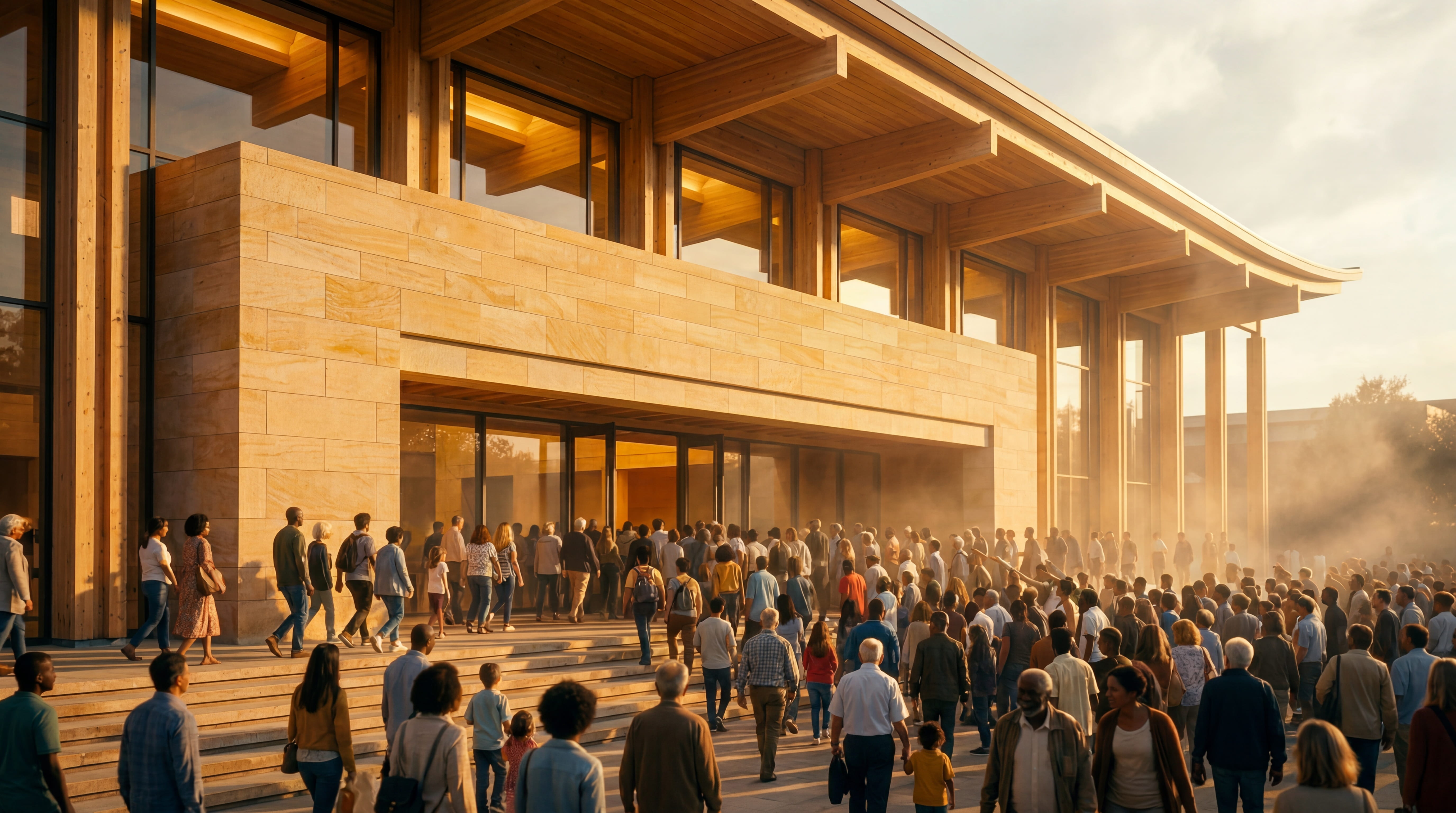
This series began with a broken machine.
It opened by naming something most people can feel but cannot quite say: that the world’s wealth piles up faster and faster in fewer and fewer hands, that citizens vote in democracies whose governments somehow keep serving someone else, that the sense the rules are rigged is not paranoia but arithmetic. Twelve people holding more than the poorest four billion combined is not the weather of an economy. And in the months since this series began, that concentration only sharpened: by mid-2026 a single man had become the world’s first trillionaire, worth — on paper — more than the poorest 3.8 billion people on earth, by himself: very nearly half of humanity. [Source: Oxfam analysis of the first trillionaire, 2026.] This is not the weather of an economy. It is the output of a particular machine, working exactly as it was designed to work. [Cross-ref: Article 1-1 — Current Political Dynamics.]
Everything between that opening and this closing has been a single, patient argument that the machine can be adjusted — not smashed, not seized, not wished away, but out-built by something with a different design, competing under the same rules and winning on its merits. The series did not ask anyone to take that on faith. It showed the arithmetic at every step: what the fund would own and how it would compete; where the money actually comes from and why the dividend is honest rather than magical; how it would be governed so that no person, company, or government could capture it; how it would manufacture fairly and serve the people it belongs to; and — in this final part — exactly how it could fail, how it defends against its own corruption, how it survives the strategies that have killed movements before, and how it answers the hardest objections serious minds can raise. None of that was decoration. It was the case, worked out in full, that the institution the world is missing can actually be built.
And now the case is made. What remains is not another argument. It is a decision.
What the reckoning leaves standing
The last several articles were the hardest in the series, on purpose. A proposal that listed only its strengths would have deserved no trust, so this part insisted on naming every way the fund could rot, fail, be attacked, or be wrong — and answering each as honestly as the answer allowed, including where the answer was only partial. That was not a loss of nerve. It was the opposite: the confidence to look straight at the worst that could happen and still conclude that the thing is worth building.
What survives that reckoning is not a guarantee. It is something better than a guarantee, because guarantees in matters this large are always lies. What survives is a proposal that has been stress-tested against its own failure modes, against the documented methods by which power defends itself, and against the strongest objections of its critics — and that remains, after all of it, standing and coherent. The fund might still fail. It was never promised not to. But it could also work, and the cost of finding out is a single dollar a month that anyone can stop paying the moment they lose faith. That asymmetry — almost nothing to risk, almost everything to gain — is the whole reckoning compressed into a sentence.
Rethinking the world order, meant literally
This series set out to rethink the world order — not as a slogan, but literally, in the plainest sense the words allow. The order of the world is simply the arrangement of who owns what, and who therefore decides. For as long as anyone can remember, that order has meant the same thing: ownership of the productive economy concentrated in a few hands, and power flowing to wherever the ownership pooled. The fund proposes a different order — one in which ownership of the collective productive economy is not concentrated at all, but spread, in equal share, across every human being who chooses to take part. Not a new set of rulers. The end of rulership over the economy as such, replaced by something owned in common and governed by all of its owners at once. This is the first work in a larger project — Rethinking the World Order — and the 99% of Humanity Global Fund is where it begins.
That is a large thing to say, and the series has spent tens of thousands of words earning the right to say it plainly. Imagine it actually built. Imagine a digital bank advertised on an ordinary street that belongs to the people who keep their money in it. Imagine the bread and the medicine and the basics of life made by companies whose profits return to the people who buy them. Imagine prices bending downward across whole industries because one large player refused to extract the maximum. Imagine a billion people — an eighth of humanity — holding an equal, un-erasable, voting share of a global institution that did not exist a generation earlier, and using it to bend the economy, slowly and lawfully, toward the people who live inside it. None of that requires a miracle. It requires only that enough people decide it is worth a dollar to begin. [Cross-ref: Article 2-1 — The 99% of Humanity Global Fund; Article 5-9 — The First Decade.]
The decision is everyone’s
Here is the honest truth the whole series has been building toward. The fund does not depend on a leader, because it was designed to have none. It does not depend on a government, because it is built to outlast and outvote them. It does not depend on the rich, because it takes their money on exactly the same terms as everyone else’s and gives them not one extra vote for it. The fund depends on one thing only, and it is the thing this final article must put squarely where it belongs: it depends on ordinary people deciding that it is theirs, and acting as it is.
That is not a weakness disguised as a virtue. It is the point. An institution owned by everyone can only be brought into being by everyone — not all at once, not unanimously, but in numbers large enough to cross the threshold from idea to fact. No one is coming to build this on the world’s behalf. There is no benefactor, no vanguard, no committee of the wise who will hand it down completed. There is only the reader, and the dollar, and the choice to be one of the people who decided this was worth beginning. The fund is the planting; the fairer world is the harvest; and the planting is done by hand, by the people who want the harvest, or it is not done at all.
So the series ends where it must: not with a conclusion, but with a question handed back to the person who has read this far. The machine that concentrates the world’s wealth and power is real, and it is working as designed. A different design now exists on paper, worked out in full, virtually tested against its own worst case, and waiting. Whether it stays a proposal or becomes an institution is not up to its authors, or to any government, or to anyone with more money or more power than you. It is up to the only people who could ever own a thing like this — which is to say, all of us, and therefore you.
The decision is everyone’s. That has always been the most radical thing about it, and the most hopeful. What happens next depends on what everyone decides to do — and everyone includes you.
Where this goes from here
If you have read this far, you are no longer only a reader. You are one of the people this proposal was waiting for — and the most natural question now is the most important one: what do I actually do? The honest answer is that the fund does not yet exist, and so the first work is not to join it but to help build the conviction, the community, and the corrections that bring it into being. There are four ways to begin, and none of them costs anything but a few minutes.
Add your voice to the series itself. At the end of every article in this series, you can leave a comment — agree, disagree, question, or push back. This is not a formality. The fund belongs to everyone, which means the argument for it belongs to everyone too, and the place to sharpen it is right where it is made, article by article. Tell us where you were convinced and where you were not. The objections of a careful reader are worth more than the applause of an easy one.
Send us the way to make it stronger. If you find a genuine weakness — in the economics, the governance, the defenses, the assumptions — do the thing this series asked its critics to do: do not just name the problem, propose the way around it. There is a place on this site to submit your recommendations directly, and every serious proposal is read. The fund was never meant to arrive finished; it was meant to be corrected by the people it belongs to, and that correction starts with you telling us what we have not yet seen.
Find the others. The question that stops most people is the quiet fear that they are alone in believing something this large could work. You are not. There is a discussion forum on this site where people from every part of the world are doing exactly what you are doing right now — thinking it through, arguing about it, improving it, and discovering how many others share the same hope. Join them. A movement is only ever a large number of people who each thought they might be the only one.
Stay with it as it grows. This series is a living document, not a monument — it will be revised as the argument is tested and strengthened by the people reading it. If you add your email to the list, you will be told when an article is updated to a new version worth re-reading, and when a reply lands on a comment or a forum post you made. That way the conversation does not end when you close the page; it continues, and you remain part of it.
None of this is the fund. The fund comes later, when enough people have decided it is real. This is the thing that comes before — the gathering of the people who will decide. Comment, recommend, discuss, and stay: four small acts, each of which turns a solitary reader into one visible member of a growing answer to the question this whole series has asked. The machine was built by people. So is the thing that replaces it. The only question left is whether you will be one of them — and that question, like the fund itself, is now in your hands.
Join the conversation
This series belongs to everyone, including its critics. Tell us where you were convinced and where you were not — and if you see a way to make the proposal stronger, say so. You'll need a free account with a handle of your choosing.
Reset your password
Enter the email you signed up with. If it's registered, we'll send you a link to set a new password.
Be the first to comment.