

The First Decade (and a Half)
Article 5-9
The First Decade (and a Half)
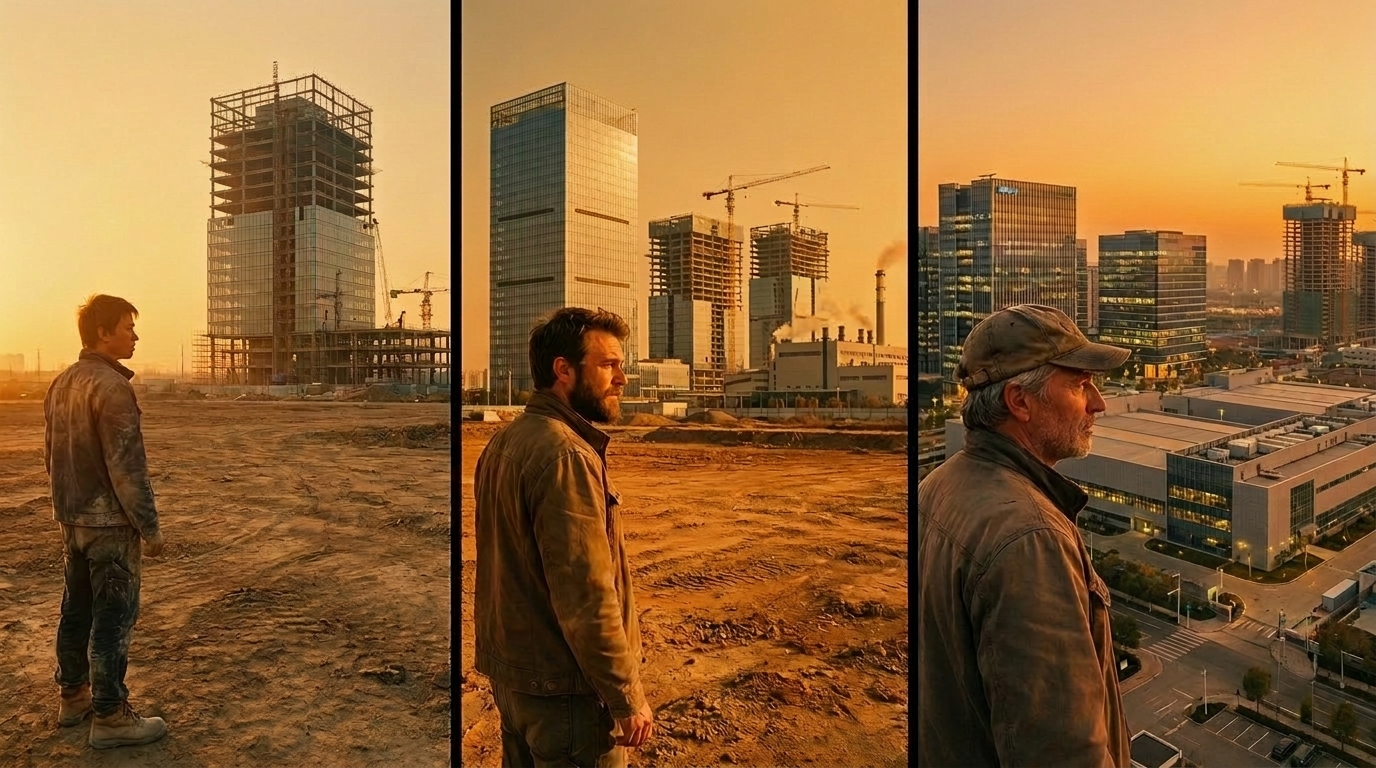
It is one thing to describe how the fund works and another to watch it happen. So let us walk through the first decade and a half as a single member would actually live it — not as a forecast, which no one can give honestly, but as the shape the careful middle case takes: what the fund builds, year by year, and what a member would actually see from where they stand.
A warning before we begin, because it is the truth of these years: very little happens fast, and the fund stays humble for a long time. Not humble in numbers — by the end of this story the fund will count its members in the hundreds of millions and then past a billion — but humble in what it has actually built and returned. For years the fund is mostly a promise being kept slowly: a machine under construction, then a machine just beginning to turn. The reward of patience comes late, and even then, as we have said throughout, it arrives more as a fairer world than as a fatter wallet.
To keep the two halves of the story straight, this article uses one clock with one marker in the middle. Everything is counted from the day memberships open — “year one” is the first year anyone can join. Around the fifth year, when enough members have joined across enough countries, the fund is ratified and switches on; the series calls that moment The Launch, and it is the hinge of the whole decade. After it, the fund’s operating years begin — operating year one is the launch year itself — so for the second half we name both: the operating year and, in brackets, the membership year it corresponds to. [Cross-ref: Article 5-4 — How the Fund Gets Built; Article 5-5 — The Fund’s Financials Through the Years.]
PHASE ONE — THE QUIET BUILD (the first five years, before The Launch)
Years one and two: the invisible foundation
A member who joins in the first year pays their dollar a month and, for a while, sees almost nothing in return. There is no fund bank in their country yet. There are no fund products on the shelf. The dividend is zero, because there is nothing yet to share — the fund is collecting its first contributions and holding them safely while the founding work is done: designing the institution, building the systems, and gathering the members it will take to launch at all. [Cross-ref: Article 5-4 — How the Fund Gets Built.]
By the end of the second year the fund has perhaps thirteen million members and a growing pool of contributions — but still no operating bank, no companies, and no dividend, because the fund has not yet launched. To an impatient member this looks like nothing is happening. In truth the most important and least visible work is happening: the institution is being drafted and refined with the members themselves, and the membership is being built toward the threshold that launch requires. What a member sees is silence. What is actually there is a foundation being poured.
Years three to five: toward The Launch
Membership climbs fast through these years — past twenty million in the third year, past thirty million in the fourth, past fifty million by the fifth — because the idea spreads on its own and because launch cannot happen until enough people across enough countries have joined. The members are not idle in this time: they are reviewing and ratifying the institution section by section, shaping the rules they will live under. [Cross-ref: Article 5-4 — How the Fund Gets Built.]
And then, around the fifth year after memberships open, the threshold is reached: enough members, across enough countries, to meet the conditions the fund set for itself. The institution is ratified. This is The Launch — the moment the fund stops being a plan and becomes a working institution. A member who has waited five years has, on paper, still received nothing: no bank, no product, no dividend. But the thing they were waiting for has just come into existence, and from here the fund begins, at last, to do rather than to prepare.
PHASE TWO — THE MACHINE STARTS TO TURN (the operating decade)
Everything that follows is dated in operating years, counted from The Launch — with the membership year shown in brackets so the single timeline stays clear. Operating year one is the launch year itself, which falls around membership year six.
Operating years one and two [membership years six and seven]: switching on
The fund is now live, with around eighty million members at The Launch and climbing. But a launched fund is not yet an operating one. In its first two operating years it does the unglamorous work of standing itself up: applying for its first banking licenses — which take around two years to obtain — recruiting its operating teams, and opening its systems to members. There is still no fund bank taking deposits and no company owned, so the dividend is still essentially zero. The accumulated contributions easily cover the costs; what takes time is the licensing, not the money. [Cross-ref: Article 5-7 — The Digital Bank: Why and When; Article 5-5 — The Fund’s Financials Through the Years.]
Operating year three [membership year eight]: the first banks open
In the third operating year — around the eighth year after memberships opened — the first fund banks open their doors, a small number at first, in the handful of countries where the earliest licenses came through. For a member in one of those countries, this is the first moment the fund becomes tangible: they can open an account, hold their money in an institution they co-own, and bank without being quietly extracted from. For members everywhere else the wait continues — the bank reaches each country only as its license and local build allow, a few new countries a year. By now the membership is well past one hundred million. [Cross-ref: Article 5-7 — The Digital Bank: Why and When.]
Operating years five and six [membership years ten and eleven]: the first company
Around the fifth to sixth operating year, a milestone the fund has been building toward since the beginning: the first whole company is acquired. Somewhere, a company that makes an everyday essential — a staple food, a generic medicine — passes into ownership by the fund, which means into equal ownership by every member. It is one company out of an economy of thousands, and most members will not yet feel its effect. But it is the proof that the model works: contributions and bank profits, turned into real ownership of a real business now run for the people who use it rather than for distant shareholders. Membership has passed four hundred million. The first meaningful dividend appears around here too — no longer a few cents, but a dollar or two per member as the banks and the first company begin to earn. No one joins for a dollar or two. But it is the first time the receipt of ownership arrives in a member’s hands, and it will grow. [Cross-ref: Article 5-6 — What Industries, and in What Order; Article 5-5 — The Fund’s Financials Through the Years.]
Operating years seven to ten [membership years twelve to fifteen]: compounding
The second half of the operating decade is where the slow build begins to compound. Each year the fund opens banks in more countries — reaching dozens of nations by the operating decade’s end — and each operating bank brings in members and earns the profit that funds the next acquisition. Each year a few more companies are bought, so that by the tenth operating year the fund owns roughly a dozen whole companies across the essentials: food, medicine, hygiene, basic goods. Membership crosses into the high hundreds of millions and then past a billion, reaching something near one and a half billion people by the end of the operating decade — roughly a sixth of humanity.
How large the dividend grows depends entirely on one thing, and the decade makes it visible: whether members buy from the companies they own. In the careful baseline, where members contribute but do not particularly shift their spending toward fund products, the dividend at the tenth operating year is still only around two dollars a year — the fund is mostly still building, not yet returning. But if members do what ownership invites them to do — buy their food, medicine, and basics from the companies they collectively own — the same decade ends with a dividend closer to twenty-five or thirty dollars a year, because member spending is what turns the fund’s companies from small acquisitions into real revenue. The dollar a month was never the engine. The spending is. A member who wants the dividend to grow holds the lever in their own hands every time they choose where to shop. [Cross-ref: Article 3-1 — What You Would Earn.]
What a member has, and does not have, by the end
Neither dividend figure is large. That is the honest truth of these years: a member puts in about twelve dollars a year and, even in the better case, receives back not much more than they paid. What they have gained instead is harder to put on a receipt — a bank that doesn’t exploit them, essentials that cost a little less, the beginning of fair work in their industry, and an equal, permanent, voting share of a global institution that did not exist fifteen years earlier and now spans more than a billion people. The first decade and a half is not the harvest. It is the planting.
And it is still, for all its size, a humble thing — humble where it counts. A billion and a half members is a sixth of the world, not the world. A dozen companies is a sliver of an economy of thousands. The bank has not reached every country; the hard industries are untouched; the dividend is small. The fund has proved its model and built its machine, and it has barely begun the work it exists to do. That is not a disappointment. It is the honest scale of a fifteen-year start on a task measured in generations.
The timeline in one view
| Membership year | Phase / event | Members | Banks (operating) | Companies | Dividend /member/yr |
|---|---|---|---|---|---|
| m-yr 1 | quiet build | ~8M | 0 | 0 | $0 |
| m-yr 2 | quiet build | ~13M | 0 | 0 | $0 |
| m-yr 3 | quiet build | ~20M | 0 | 0 | $0 |
| m-yr 4 | quiet build | ~33M | 0 | 0 | $0 |
| m-yr 5 | The Launch (≈ here) | ~52M | 0 | 0 | $0 |
| operating clock begins: op-yr 1 ≈ m-yr 6 | |||||
| op-yr 1 [m6] | switching on | ~80M | 0 (licensing) | 0 | $0 |
| op-yr 2 [m7] | switching on | ~125M | 0 | 0 | $0 |
| op-yr 3 [m8] | first banks open | ~195M | ~4 | 0 | a few cents |
| op-yr 4 [m9] | banks spreading | ~300M | ~9 | 0 | ~$0.10 |
| op-yr 5 [m10] | first company (≈) | ~468M | ~14 | 1 (first!) | ~$1.24 |
| op-yr 6 [m11] | building | ~620M | ~20 | ~2 | ~$0.97 † |
| op-yr 7 [m12] | compounding | ~800M | ~28 | ~4 | ~$1.40 |
| op-yr 8 [m13] | compounding | ~1.0B | ~35 | ~6 | ~$1.86 |
| op-yr 9 [m14] | compounding | ~1.27B | ~44 | ~9 | ~$2.00 |
| op-yr 10 [m15] | decade’s end | ~1.5B | ~53 | ~12 | ~$2.19 * |
The dividend column is the baseline throughout — what a member receives if spending habits never change. † The dip at operating year six is real and worth seeing: the fund’s first acquisitions bring in new members faster than they bring in profit, so the same earnings are divided among more people before the companies mature. * At the end of the operating decade the baseline dividend is ~$2.19, rising toward ~$25–30 if members route their everyday spending to the companies they own. That gap — not the baseline — is the single biggest variable in the whole model. [Figures for operating years 7 and 9 are interpolated between the modelled points. See 3-1 and the interactive model. All figures approximate; the baseline matches 5-5.]
Fifteen years from the day memberships first opened — ten years after The Launch — the fund banks in dozens of countries, owns around a dozen companies in the world’s essential industries, counts more than a billion members, and has begun, just begun, to bend prices and wages toward fairness where it operates. It is not yet the institution it means to become: the bank has not reached every country, the hard industries are untouched, the dividend is small. But the machine is built and turning, funded by its own earnings, owned equally by everyone in it. The decades that follow are when the planting becomes a harvest. [Cross-ref: Article 5-6 — What Industries, and in What Order.]
Join the conversation
This series belongs to everyone, including its critics. Tell us where you were convinced and where you were not — and if you see a way to make the proposal stronger, say so. You'll need a free account with a handle of your choosing.
Reset your password
Enter the email you signed up with. If it's registered, we'll send you a link to set a new password.
Be the first to comment.